

What Research Suggests about Montessori
Two recent studies, explained for parents
Is Montessori “working”? A research-backed answer for parents.
Parents often wonder whether Montessori is “working,” especially when their child’s progress can’t be measured with grades like it would be in a traditional school. Recent research suggests the benefits may simply take time to see.
In this session, we unpack two recent studies for your parents through interactive dashboards and data storytelling, in plain, parent-friendly terms.
We turn research into data stories your parents can explore
Research papers aren’t written for parents. Our Montessori Data Lens team builds interactive dashboards and data stories from these two studies, then unpacks the insights for your families in plain language.
The webinar covers two recent research studies
A Data Story of Public Montessori Preschool
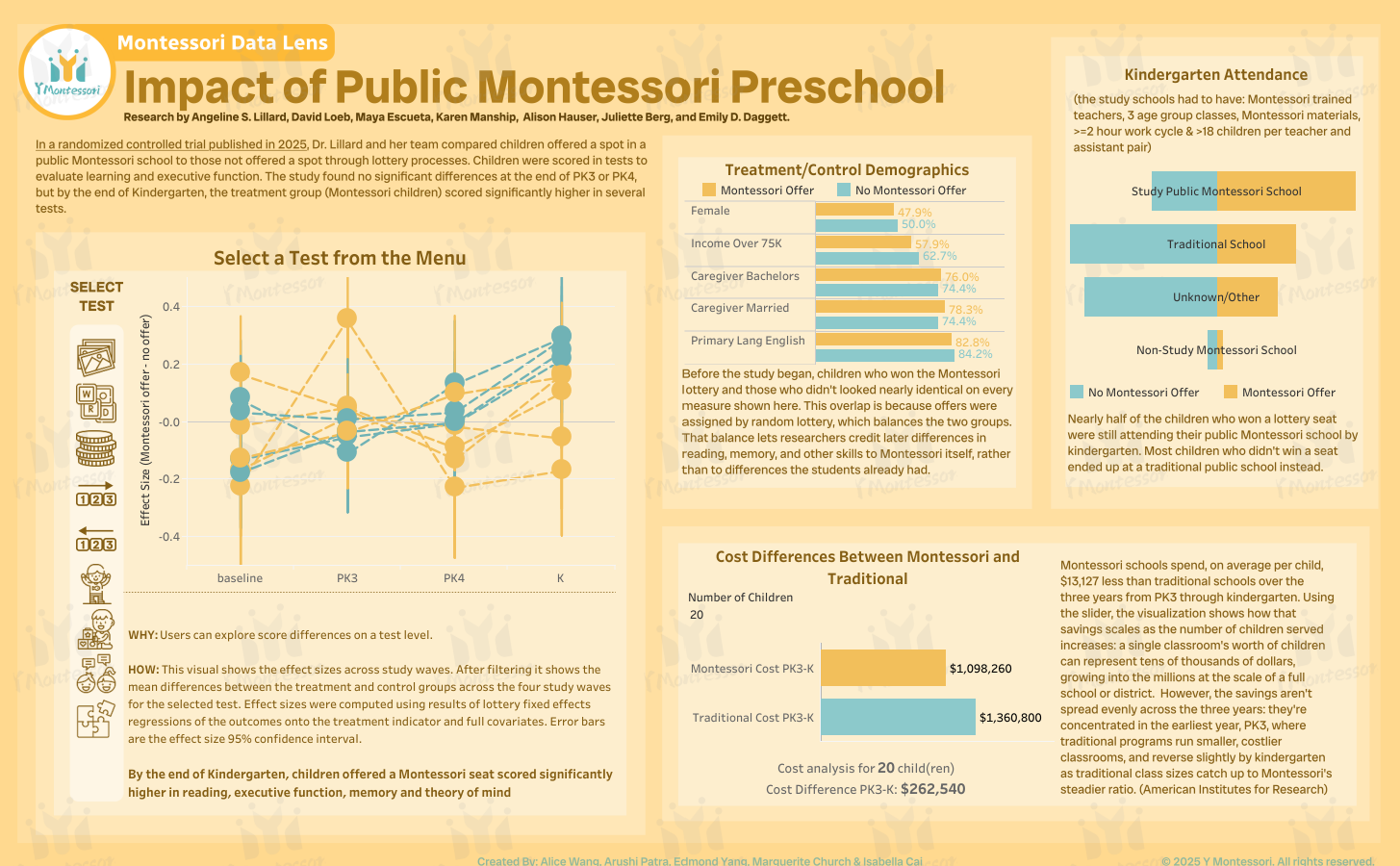
588 children applied to 24 public Montessori preschools. Seats were offered by lottery, so the two groups started out alike.
No differences at the end of PK3 or PK4. By the end of kindergarten, children offered a Montessori seat were ahead in reading, focus and self-control, memory, and understanding others.
The gains came mainly in the third year of the cycle, which is why staying through kindergarten, and the larger mixed-age classroom, matter.
A Data Story of Montessori Math
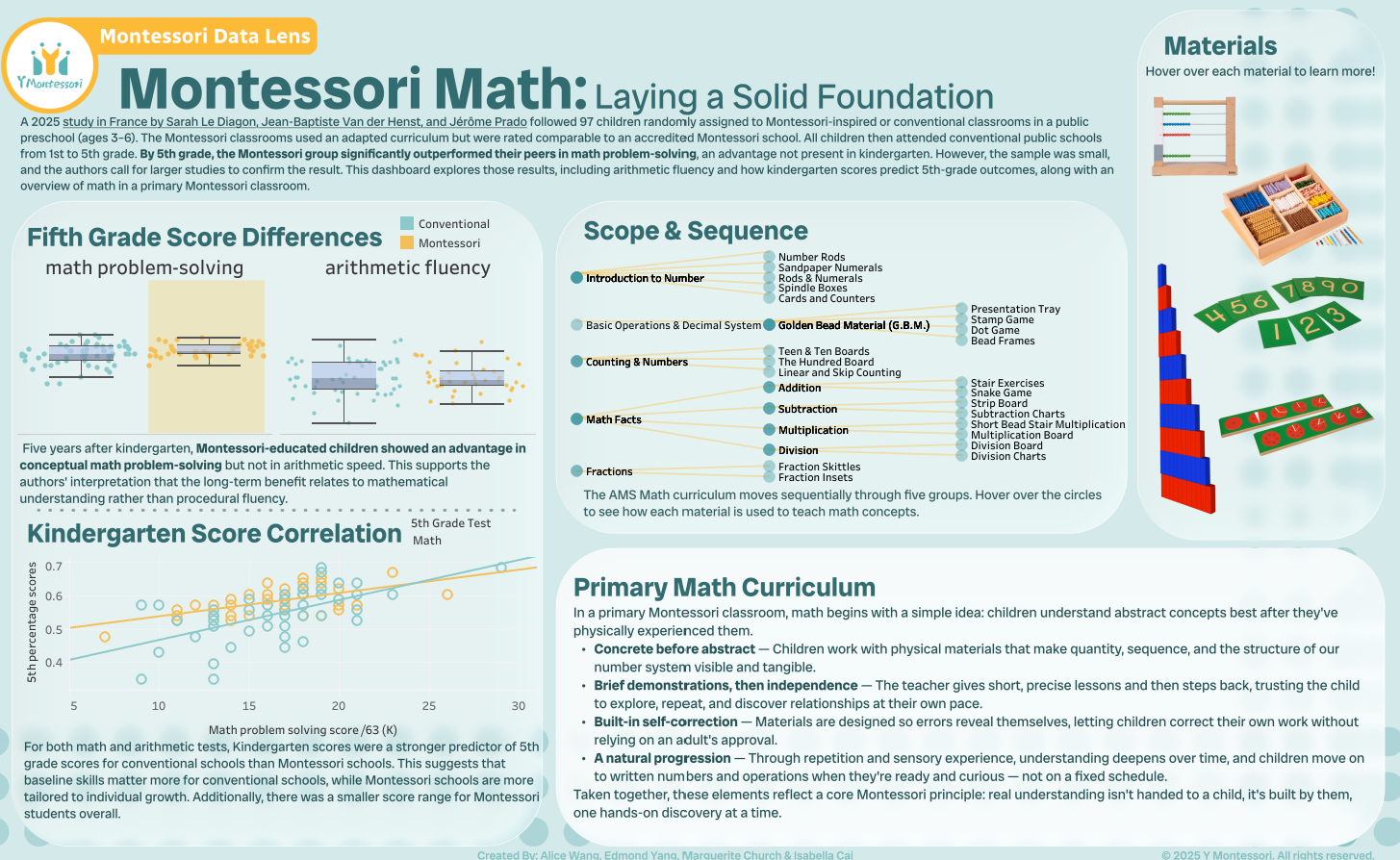
97 children in a French public preschool were randomly placed in Montessori-inspired or conventional classrooms (ages 3–6), then followed to 5th grade.
By 5th grade, the Montessori group was better at solving math problems, but not faster at arithmetic. The advantage wasn’t visible in kindergarten.
Hands-on materials like the golden beads build conceptual understanding rather than quick answers, and that understanding shows up years later.
Explore the data stories
A Data Story of Public Montessori Preschool
588 children at 24 public Montessori schools were offered seats by lottery. By the end of kindergarten, Montessori children were ahead in:
Interestingly, these gains showed up mainly in the third year of the classroom cycle, which helps explain why classrooms are larger and mixed-age.
A Data Story of Montessori Math
A study from France followed children for five years, from preschool to 5th grade.
What parents will take away
The benefits may simply take time to see
Gains showed up by the end of kindergarten, and in math by 5th grade, not in the early years.
Why staying through the third year matters
Most of the gains appeared in the final year of the three-year classroom cycle.
Why classrooms are larger and mixed-age
How the Montessori classroom is set up on purpose, and what the research suggests about it.
Understanding over quick answers
Why hands-on materials like the golden beads build understanding that shows up years later.
Want to bring research-backed insights to your parents?
Book the parent webinar, or host a parent survey to gain data-driven insights into your families’ experience.